Blog
Will a Damp Survey Identify Rising Damp, Penetrating Damp or Condensation?
A damp reading is not the diagnosis
A damp patch does not explain itself. The same visible mark can be caused by moisture rising through masonry, water entering through the building envelope, or condensation forming because humid air is not being controlled. Treating the appearance alone is how properties end up with unnecessary work, recurring mould or plaster that fails again.
When we carry out a Damp Proofing Quote Assessment Survey in Bedfordshire, we use the readings as evidence within a wider inspection. The important question is not simply whether a wall is damp. It is how the moisture got there, where it is moving and what conditions are allowing the problem to continue.
You can read the Damp Proofing Quote Assessment Survey service overview, but the useful detail is in how the evidence is collected and interpreted on site.
What we look at during the survey
1. The pattern of damage
The position and shape of damp can immediately change the line of investigation. Moisture concentrated at the lower part of a wall may point towards a ground-related issue, but it does not prove rising damp. A high reading beside a window, chimney breast or external wall may have a different cause.
We look at skirting boards, plaster, wall finishes, corners, chimney areas and the relationship between affected and unaffected surfaces. We also photograph the areas so the findings are recorded rather than relying on a description given later.
The pattern matters because moisture does not always appear where it entered. Water can travel through masonry, follow defects in joints or collect behind finishes before becoming visible elsewhere.
2. Moisture readings at different heights
A single meter reading has limited value. It tells us that a material is responding to moisture, but it cannot by itself identify the source. Readings need to be taken at relevant points and compared across the affected area.
A changing profile from the floor upwards may support one explanation. Readings concentrated around a local defect may support another. However, walls contain salts, different materials and changes in density, all of which can influence meter readings. That is why we do not treat the highest number as the answer.
The readings become more useful when considered alongside the wall construction, visible staining, plaster condition and external defects. This reduces the risk of recommending a damp proof course or waterproofing system where the actual problem is elsewhere.
3. How moisture may be getting in
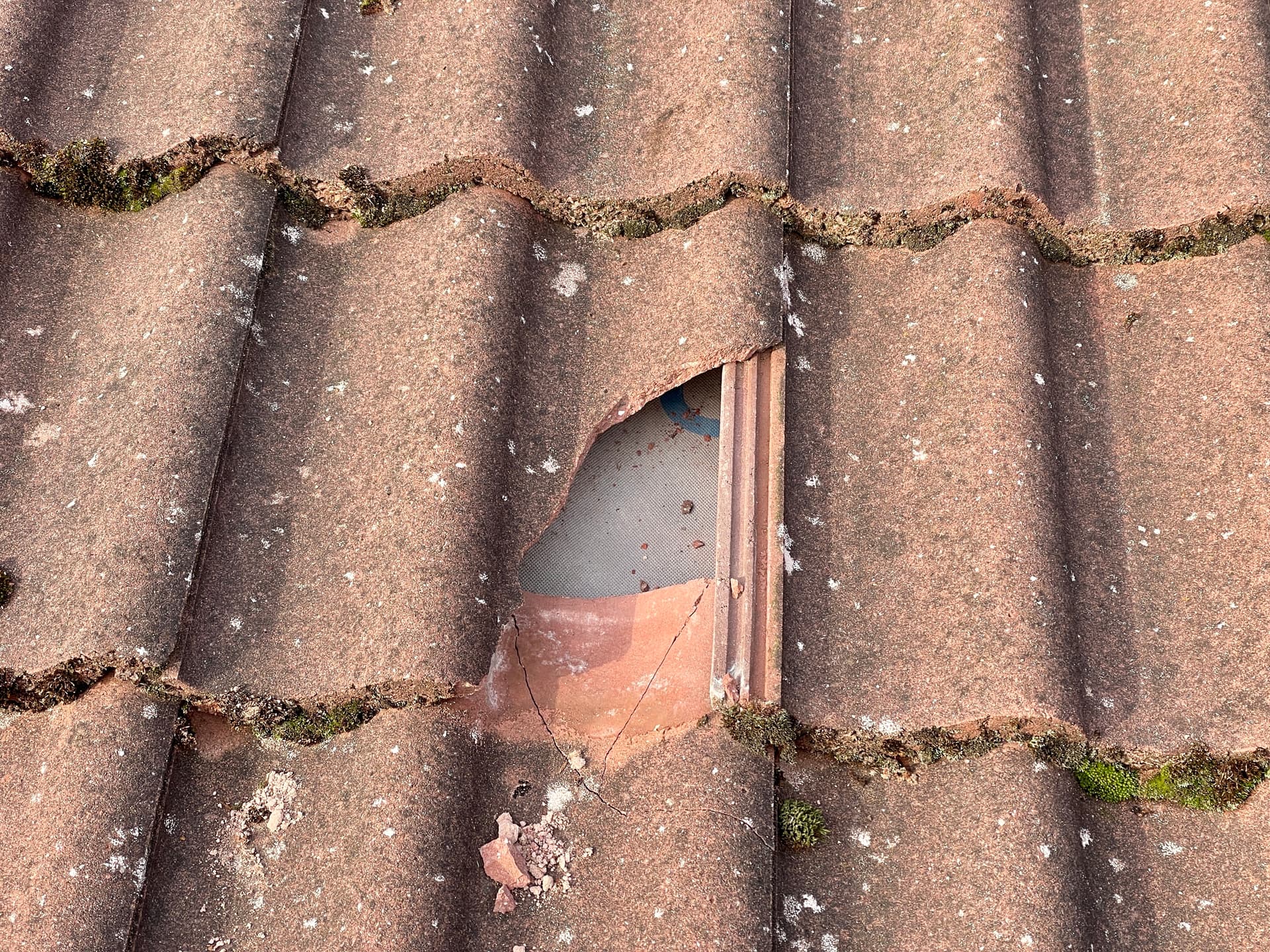
For suspected penetrating damp, we consider how water could be getting into or staying against the building. That may involve defects in the brickwork, worn mortar, cracks, leaking gutters or downpipes, damaged seals or gaps where the roof joins the building. The relevant clue is often a localised area of damage that relates to a specific external feature.
Inside, we look for signs such as staining around openings, damage beneath a defect or damage that becomes worse on one side of the building. The remedy depends on the route, so identifying the entry point is more important than applying a coating over the mark.
For suspected condensation, we assess the room and how moisture is being produced, moved and removed. Bathrooms, kitchens, bedrooms and rooms with limited ventilation can behave very differently. Cold surfaces, restricted airflow and high indoor humidity can create mould even where there is no penetrating water or rising damp.
4. Plaster, salts and timber condition
Plaster can retain salts and other residues after the original source of moisture has been reduced. Salt deposits may draw moisture from the air and cause a wall to remain visually damp, which can confuse the diagnosis. We consider the condition of the plaster rather than assuming that a damaged finish is proof of an active damp source.
Where timber is close to affected areas, we inspect it for signs that moisture has reached the structure. This helps establish whether the issue is confined to decoration and plaster or whether further treatment may need to be considered. The distinction affects both the recommendation and the extent of disruption.
What the findings can and cannot tell you
A proper survey can usually narrow the cause by combining several clues, but a responsible diagnosis must reflect the evidence available in that property. Some buildings have more than one moisture problem at the same time. For example, a wall may have an external defect while poor ventilation creates separate condensation around a cold internal surface.
That is why a conclusion should explain the reasoning, not just attach a label such as rising damp. We set out the observed symptoms, relevant readings and photographic evidence, then relate the proposed remedial work to the cause identified. Where further investigation is needed, that should be clear rather than hidden behind a broad recommendation.
Why the diagnosis affects the repair
The wrong diagnosis can lead to work that treats the symptom while leaving the source of the moisture unresolved. A new finish may fail if water is still entering. Additional ventilation may not resolve a masonry defect. A damp proof course will not correct every low-level mark, particularly where something is allowing moisture to bypass it, or where plumbing or contaminated plaster is involved.
Our survey is designed to give you a written basis for deciding what happens next. The quotation can then reflect the actual scope, whether that involves plaster removal, specialist damp resistant plastering, ventilation, waterproofing, brickwork repairs or another appropriate measure.
For properties across Bedfordshire and the surrounding areas, including Cambridgeshire, Hertfordshire, Buckinghamshire and Northamptonshire, contact Procure Damp Proofing Group to arrange an evidence-led assessment. We will explain what the findings mean for your property, so you can make a properly informed decision before committing to remedial work.
Other Articles